



When a resident calls L&Q to report damp and mould, one question matters above all others: is anyone in that property vulnerable? Here's how Conversational Intelligence helped L&Q make sure that the question is always asked and always answered.
Housing associations face a clear obligation under Awaab's Law: where a resident reporting damp and mould is also vulnerable, the response must be fast. For L&Q, a registered charity housing 250,000 people across London and Manchester, that meant getting one critical step right on every call. Advisors needed to check for vulnerability every time, without exception. The problem was that L&Q had no reliable way to know whether that was actually happening.
The problem: a real blind spot
Most resident contact at L&Q flows through its customer service centre. Calls were recorded, but notes were manual, and there was no systematic way to report on what was actually being said. Quality teams ran sample-based checks each month, enough to raise concerns, not enough to demonstrate consistent practice.
“At the time, we believed we were taking the right approach; however, we lacked the evidence required that could provide assurance to the regulator and the Housing Ombudsman,” says Kim Baker, Head of Operational Support Services at L&Q.
How Conversational Intelligence changed that
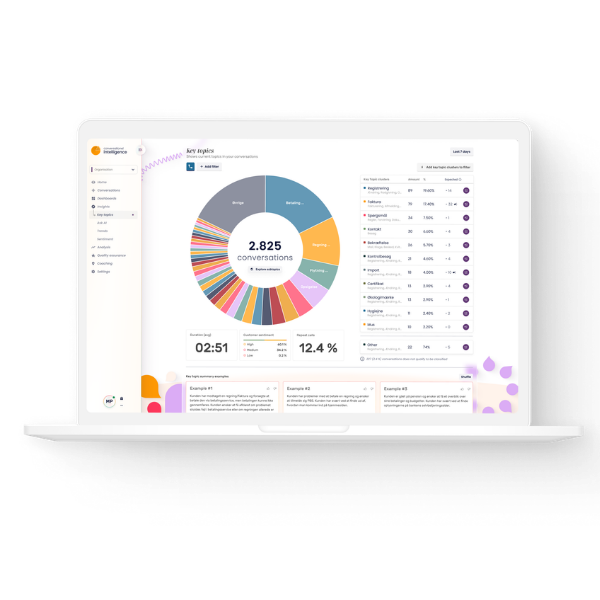
After rolling out Puzzel's Conversational Intelligence, L&Q now analyses every single resident conversation, not just a sample. The team built trackers specifically for damp and mould calls: key phrases to identify when a new case is being reported, and checks to confirm whether advisors are having the vulnerability discussion, either confirming a vulnerability is present or confirming that no one in the property has one.
That distinction matters. Knowing which cases involve a vulnerable resident is what allows L&Q to prioritise correctly and make sure the right cases reach maintenance teams without delay. Advisors no longer need to listen to a full call; managers can jump directly to the relevant section to check that the conversation happened as it should.
94% and a clearer picture of what's working
In 94% of calls where a resident reports a new damp and mould case, L&Q can now confirm that advisors have either identified a vulnerability or confirmed its absence. That consistency is what allows cases to be triaged and prioritised with confidence.
The platform also surfaced something harder to measure before: empathy. Sentiment analysis shows that in nearly 80% of damp and mould calls, advisors respond with high-value language that residents actually need to hear.
AI-assisted coaching gives team leaders a per-advisor view of talk ratios, sentiment scores, and specific areas for improvement, without having to review every QA form manually.
"We've really felt it has taken us from a real blind spot to visibility," says Kim.
What comes next
L&Q is now extending Conversational Intelligence to email and digital channels, so that damp and mould reports submitted online feed into the same framework. Scripting to support advisors further is also in development for the coming months. A working group on repeat contacts, a larger-than-expected issue that surfaced through the platform, is already underway.

For housing associations working through the practical realities of Awaab's Law, the L&Q story makes a clear case: getting the right conversations right, consistently, starts with being able to see what's actually happening in every resident interaction.
Explore Conversational Intelligence
Use the interactive below to get a glance at how AI can help you gain deeper insight into your customer service operations.