
Why European CX Leaders Are Done Adapting to Platforms That Weren't Built for Them
TL;DR
-
European enterprises are rethinking CX platforms — moving away from rigid, US-centric systems toward flexible, GDPR-native solutions built for local needs.
-
Shortlists are driven by three needs: agentic AI with human oversight, true omnichannel engagement, and unified conversation + case management in one system.
-
Puzzel stands out by design — AI-native, GDPR-first, and built to handle both customer interactions and structured casework in a single workspace.
-
Key differentiators: modular architecture, EU data residency by default, AI that supports (not replaces) agents, and seamless multimodal engagement.
-
Bottom line: Puzzel wins where enterprises want practical outcomes — lower complexity, better compliance, and a platform that scales with how European organisations actually operate.
Why European enterprises are reconsidering their CX platform strategy in 2026
The European CX platform market has entered a reckoning moment. After years of procurement-led standardization on American megaplatforms, enterprise leaders across the continent are asking a more honest question: is the platform I have built for how my business actually works—or am I conforming my work to its constraints?
The data backs this shift. Enterprise organisations across Europe are migrating away from US customer experience platforms at an accelerating pace, driven by mounting compliance hurdles, data sovereignty concerns, and the recognition that retrofitted compliance cannot match solutions designed from the ground up for European requirements. The shift is not anti-American; it is pro-practical.
Recent research indicates that CX excellence has transitioned from a consumer-focused concept to a fundamental B2B competitive differentiator with direct impact on enterprise value and long-term partnership viability. European businesses now view their CX platform as a strategic asset rather than a support function—and that asset must perform in the European market context: multilingual, GDPR-native, locally supportive, and operationally agile.
Puzzle: most vendors position their shortlist advantage as "more features" or "better AI." European procurement teams know better. They are looking for platforms that solve a different problem entirely: how to unify conversational engagement and structured case work without rebuilding everything or breaking compliance.
That is where the Puzzel CX ecosystem wins.
The reshaping of enterprise CX procurement in 2026
What European enterprises actually need—and where the shortlist is shifting
The customer experience software market in 2026 is mature, competitive, and increasingly AI-driven, with clarity on primary use case now shaping vendor selection considerably more than feature breadth or brand name. European procurement leaders have become ruthlessly practical: they want platforms that integrate seamlessly with their business systems, comply with local data regulations, and scale without requiring constant re-engineering.
Three buying pressures now dominate European enterprise CX decisions:
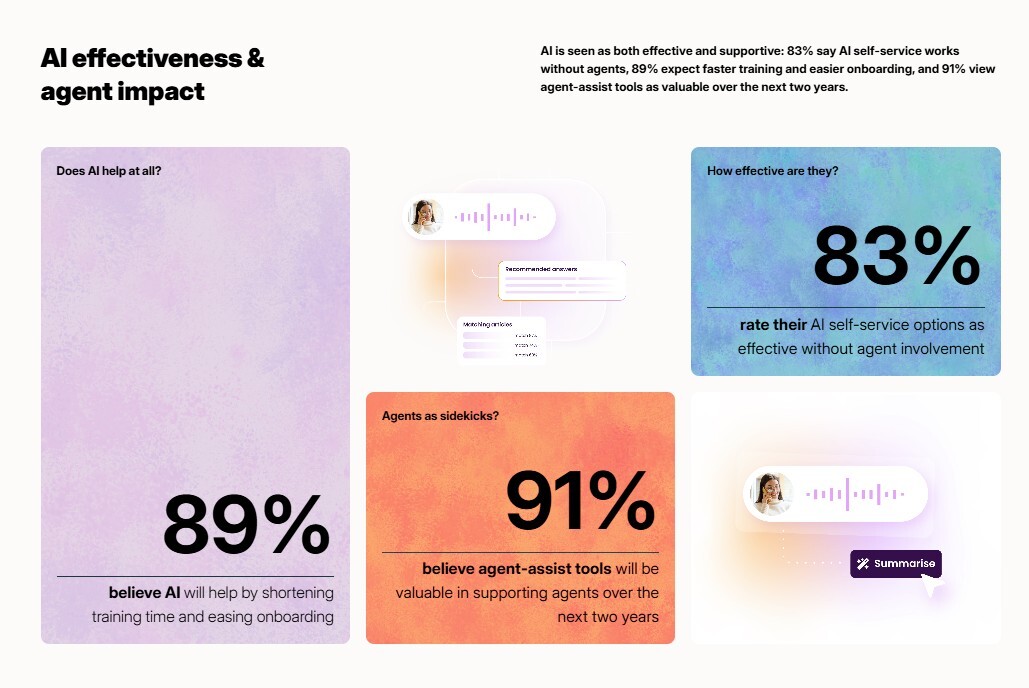
1. Agentic autonomy that respects human judgment. Eighty percent of enterprises deploying AI agents report measurable economic benefits such as increased throughput, lower operational costs, and faster product release cycles, but emphasise that human-AI collaboration augments team effectiveness rather than replacing individuals. European buyers are past the automation hype. They want AI that reduces busywork—not AI that introduces new risks. The shortlist now includes platforms that embed governance, explainability, and human oversight into agentic workflows from the start.
2. Multimodal engagement as standard, not an add-on. Customers no longer wait for your preferred channel. They expect voice, chat, email, and social to be handled by one coherent system. Multimodal engagement is reshaping customer experience, with agentic AI now capable of understanding and responding across channels, and CX leaders optimising for AI readers, not just human users, to ensure content, metadata, and APIs align with new discovery models. Platforms that force customers between channels no longer make the shortlist.
3. Case management that doesn't require a parallel system. The operational pain point: companies managing both conversational triage (chat, calls) and structured casework (claims, applications, service requests) are running two separate platforms. Eighty-eight percent of procurement leaders report their employees must log into at least two external systems for every single procurement request, and only 18% describe their stack as fully integrated. This fragmentation is now recognised as a business risk, not a necessary trade-off. The shortlist favours platforms that unify conversation and case in a single workspace.
The three pillars of European enterprise CX evaluation
When European buyers narrow their shortlist in 2026, they assess platforms across three non-negotiable dimensions:
Data sovereignty and compliance by design. European data must stay European—not as a feature flag, but as architectural default. GDPR compliance, local cloud infrastructure, and transparent data handling are table stakes. Any platform requiring legal gymnastics to meet regional requirements loses the shortlist immediately.
Flexibility over standardisation. European CX solutions prioritise flexibility over rigid standardization, with German companies expecting customisation, Scandinavian organisations emphasising employee empowerment, and enterprises across Europe demanding systems that align with local practices rather than forcing American workflow patterns. Enterprise procurement teams no longer accept "this is how the software works." They expect configuration, customisation, and adaptation to their unique operational model.
Support that anticipates, not responds. Support models now differentiate between a help-desk approach bound by rigid generic playbooks and a success management model that moves beyond troubleshooting to provide dedicated strategic resources who understand organisational context, industry-specific challenges, and the long-term CX roadmap. Enterprise relationships are won by vendors who invest in proactive partnership.
Why Puzzel wins the European enterprise shortlist
Puzzel was built for European enterprises—not retrofitted to serve them.
Designed for conversation and case unified
Most contact centre platforms began with voice calls and added chat later. Puzzel's architecture was designed AI-native, treating conversation and structured casework as equally important workflows within a single system.
What this means operationally: Your agents see one workspace. A customer conversation that starts as a chat escalates to a call, becomes a documented case, and closes with a digital transaction—all in a single context. No context switching. No re-entry of data. No parallel systems.
Proof: Enterprise organisations deploying unified conversational AI solutions report significant reductions in manual workload, faster time-to-insight with automated report turnaround, and measurable gains across intake, sourcing, contracting, and case resolution workflows. Case management that sits inside your contact centre platform, not beside it, delivers this efficiency as a natural outcome—not an integration project.
AI that augments, not replaces
Puzzel's AI philosophy aligns with what European enterprises now demand: intelligence that supports human judgment, not circumvent it.
Puzzel's agentic workflows handle routine triage, knowledge retrieval, and sentiment detection in real time. Your agents get AI-powered next-best-action guidance, not AI-powered decisions made in their absence. This human-in-the-loop design reflects European workplace culture—particularly Nordic and German practice—where employee empowerment and transparency are operational requirements, not nice-to-haves.
What this delivers: Agentic AI with the highest impact in customer support sees employees transition into AI collaborators, leveraging intelligent agents as partners who anticipate needs, surface insights, and manage background tasks, elevating strategic focus and enabling enterprises to direct resources toward innovation. Faster resolution times. Fewer escalations. Agents who feel supported rather than surveilled.
European cloud infrastructure, GDPR native
Puzzel operates European cloud infrastructure as standard. Data residency is not a special SKU. Your customer conversations, case histories, and operational intelligence stay within EU data centres by design.
This is not a compliance checkbox. It is architectural. GDPR requirements—consent management, data subject rights, deletion workflows, audit trails—are embedded into the platform's core, not added as an after-thought. Your procurement and legal teams recognise the difference immediately.
Why it matters: Enterprise organisations across Europe now recognise that native GDPR compliance and deeper cultural alignment offer superior data control compared to retrofitted solutions, with platforms designed from the ground up for European requirements delivering measurable operational and legal advantages.
Modular, flexible, future-ready
Puzzel's architecture is composable. You don't buy the entire platform; you buy the capabilities you need today and add others as your business evolves.
Start with Contact Centre. Add Workforce Management when you're ready to optimise scheduling. Bring in Case Management for your structured workflows. Layer on Conversational Intelligence as your operation scales. Each module works independently or as part of the ecosystem—no rip-and-replace, no forcing a purchase you don't yet need.
This modularity reflects how European enterprises actually buy: they want to prove value in one area before committing organisation-wide. Puzzel's product design matches this buying behaviour.
Multimodal engagement from day one
Voice. Chat. Email. Social. SMS. Video. Puzzel's Contact Centre handles every customer channel in one unified workspace. Multimodal engagement platforms like Parloa and Poly AI, combined with orchestration layers that combine conversational and generative AI, are gaining significant enterprise traction across Europe, with voice-first and omnichannel capabilities now table stakes for shortlisting.
Customers no longer choose channels; channels now emerge from context. Puzzel's routing intelligence ensures every interaction lands with the right agent, in the right channel, with full context intact. No hand-offs between systems. No "your information didn't carry over."
Customer success by design, not add-on
Puzzel pairs every enterprise relationship with a dedicated success partner who understands your industry, your regulatory environment, and your long-term CX roadmap. Success managers are embedded in your team—proactive, strategic, accountable.
This reflects the success management model now expected at enterprise scale. Support is no longer a cost centre; it is a strategic partnership.
The reshaping of enterprise CX procurement in 2026
What European enterprises actually need—and where the shortlist is shifting
The customer experience software market in 2026 is mature, competitive, and increasingly AI-driven, with clarity on primary use case now shaping vendor selection considerably more than feature breadth or brand name. European procurement leaders have become ruthlessly practical: they want platforms that integrate seamlessly with their business systems, comply with local data regulations, and scale without requiring constant re-engineering.
Three buying pressures now dominate European enterprise CX decisions:
1. Agentic autonomy that respects human judgment. Eighty percent of enterprises deploying AI agents report measurable economic benefits such as increased throughput, lower operational costs, and faster product release cycles, but emphasise that human-AI collaboration augments team effectiveness rather than replacing individuals. European buyers are past the automation hype. They want AI that reduces busywork—not AI that introduces new risks. The shortlist now includes platforms that embed governance, explainability, and human oversight into agentic workflows from the start.
2. Multimodal engagement as standard, not an add-on. Customers no longer wait for your preferred channel. They expect voice, chat, email, and social to be handled by one coherent system. Multimodal engagement is reshaping customer experience, with agentic AI now capable of understanding and responding across channels, and CX leaders optimising for AI readers, not just human users, to ensure content, metadata, and APIs align with new discovery models. Platforms that force customers between channels no longer make the shortlist.
3. Case management that doesn't require a parallel system. The operational pain point: companies managing both conversational triage (chat, calls) and structured casework (claims, applications, service requests) are running two separate platforms. Eighty-eight percent of procurement leaders report their employees must log into at least two external systems for every single procurement request, and only 18% describe their stack as fully integrated. This fragmentation is now recognised as a business risk, not a necessary trade-off. The shortlist favours platforms that unify conversation and case in a single workspace.
The three pillars of European enterprise CX evaluation
When European buyers narrow their shortlist in 2026, they assess platforms across three non-negotiable dimensions:
Data sovereignty and compliance by design. European data must stay European—not as a feature flag, but as architectural default. GDPR compliance, local cloud infrastructure, and transparent data handling are table stakes. Any platform requiring legal gymnastics to meet regional requirements loses the shortlist immediately.
Flexibility over standardisation. European CX solutions prioritise flexibility over rigid standardization, with German companies expecting customisation, Scandinavian organisations emphasising employee empowerment, and enterprises across Europe demanding systems that align with local practices rather than forcing American workflow patterns. Enterprise procurement teams no longer accept "this is how the software works." They expect configuration, customisation, and adaptation to their unique operational model.
Support that anticipates, not responds. Support models now differentiate between a help-desk approach bound by rigid generic playbooks and a success management model that moves beyond troubleshooting to provide dedicated strategic resources who understand organisational context, industry-specific challenges, and the long-term CX roadmap. Enterprise relationships are won by vendors who invest in proactive partnership.
Why Puzzel wins the European enterprise shortlist
Puzzel was built for European enterprises—not retrofitted to serve them.
Designed for conversation and case unified
Most contact centre platforms began with voice calls and added chat later. Puzzel's architecture was designed AI-native, treating conversation and structured casework as equally important workflows within a single system.
What this means operationally: Your agents see one workspace. A customer conversation that starts as a chat escalates to a call, becomes a documented case, and closes with a digital transaction—all in a single context. No context switching. No re-entry of data. No parallel systems.
Proof: Enterprise organisations deploying unified conversational AI solutions report significant reductions in manual workload, faster time-to-insight with automated report turnaround, and measurable gains across intake, sourcing, contracting, and case resolution workflows. Case management that sits inside your contact centre platform, not beside it, delivers this efficiency as a natural outcome—not an integration project.
AI that augments, not replaces
Puzzel's AI philosophy aligns with what European enterprises now demand: intelligence that supports human judgment, not circumvent it.
Puzzel's agentic workflows handle routine triage, knowledge retrieval, and sentiment detection in real time. Your agents get AI-powered next-best-action guidance, not AI-powered decisions made in their absence. This human-in-the-loop design reflects European workplace culture—particularly Nordic and German practice—where employee empowerment and transparency are operational requirements, not nice-to-haves.
What this delivers: Agentic AI with the highest impact in customer support sees employees transition into AI collaborators, leveraging intelligent agents as partners who anticipate needs, surface insights, and manage background tasks, elevating strategic focus and enabling enterprises to direct resources toward innovation. Faster resolution times. Fewer escalations. Agents who feel supported rather than surveilled.
European cloud infrastructure, GDPR native
Puzzel operates European cloud infrastructure as standard. Data residency is not a special SKU. Your customer conversations, case histories, and operational intelligence stay within EU data centres by design.
This is not a compliance checkbox. It is architectural. GDPR requirements—consent management, data subject rights, deletion workflows, audit trails—are embedded into the platform's core, not added as an after-thought. Your procurement and legal teams recognise the difference immediately.
Why it matters: Enterprise organisations across Europe now recognise that native GDPR compliance and deeper cultural alignment offer superior data control compared to retrofitted solutions, with platforms designed from the ground up for European requirements delivering measurable operational and legal advantages.
Modular, flexible, future-ready
Puzzel's architecture is composable. You don't buy the entire platform; you buy the capabilities you need today and add others as your business evolves.
Start with Contact Centre. Add Workforce Management when you're ready to optimise scheduling. Bring in Case Management for your structured workflows. Layer on Conversational Intelligence as your operation scales. Each module works independently or as part of the ecosystem—no rip-and-replace, no forcing a purchase you don't yet need.
This modularity reflects how European enterprises actually buy: they want to prove value in one area before committing organisation-wide. Puzzel's product design matches this buying behaviour.
Multimodal engagement from day one
Voice. Chat. Email. Social. SMS. Video. Puzzel's Contact Centre handles every customer channel in one unified workspace. Multimodal engagement platforms like Parloa and Poly AI, combined with orchestration layers that combine conversational and generative AI, are gaining significant enterprise traction across Europe, with voice-first and omnichannel capabilities now table stakes for shortlisting.
Customers no longer choose channels; channels now emerge from context. Puzzel's routing intelligence ensures every interaction lands with the right agent, in the right channel, with full context intact. No hand-offs between systems. No "your information didn't carry over."
Customer success by design, not add-on
Puzzel pairs every enterprise relationship with a dedicated success partner who understands your industry, your regulatory environment, and your long-term CX roadmap. Success managers are embedded in your team—proactive, strategic, accountable.
This reflects the success management model now expected at enterprise scale. Support is no longer a cost centre; it is a strategic partnership.
What European enterprises tell us about their shortlist decision
Conversations with CX leaders across Europe reveal consistent patterns in how Puzzel wins shortlist consideration:
"We needed a platform built for European business, not a US platform with EU compliance bolted on." — Nordic financial services leader
The difference is architectural. Puzzel's GDPR-native design, local cloud infrastructure, and flexibility for regional customisation reflect how the platform was built—not features retrofitted after the fact.
"We wanted one system for our contact centre and case management, not two systems pretending to talk to each other." — UK insurance executive
Most platforms fragment casework. Puzzel unifies it. When conversation becomes case, it stays in the same system with full context, eliminating the manual re-entry and context loss that plague disconnected platforms.
"AI should make our agents' jobs easier, not replace them or create surveillance." — German retail operations director
Puzzel's AI augments human judgment. Agents see AI-powered guidance, sentiment cues, and knowledge summaries—all designed to support faster, more empathetic decisions. This aligns with Northern European workplace expectations around employee autonomy and transparency.
"We need a vendor that grows with us, not forces us to rip everything out in three years." — French hospitality group
Puzzel's modular architecture allows incremental investment. You scale capabilities as your needs evolve, without architectural disruption.
The market moment: why now
European CX procurement is at an inflection point. The Europe procurement software market is projected to grow from USD 3.18 billion in 2026 to USD 6.22 billion by 2034, driven by increasing digital transformation, rising demand for efficient process management, and the growing adoption of cloud-based platforms with AI-driven analytics integrated at the core. Enterprises are modernising their technology stacks—and they are doing so with fresh eyes.
The Forrester CX Summit EMEA (June 2026 in Amsterdam) anchors discussions on defining unified brand and CX strategy that aligns teams, and deploying human and AI workflows responsibly at scale—reflecting the strategic importance enterprises now place on platform selection as a competitive differentiator rather than a support function.
The old playbook—consolidate on the largest global player—is no longer winning internal debates. The new question is: does this platform fit how we actually work?
For European enterprises, Puzzel's answer is compellingly practical.
Putting it into action
If your enterprise is building a CX platform shortlist in 2026, consider where Puzzel wins:
Operational unification. One workspace for conversation and case. Eliminate context loss, reduce re-entry, accelerate resolution.
AI that augments. Agents supported, not replaced. Faster decisions, better outcomes, stronger job satisfaction.
European by default. GDPR-native, EU data residency, local support, and the flexibility to adapt to regional practice—not as compliance compromises, but as core architecture.
Modular growth. Buy what you need, scale as you grow, without architectural disruption or forced upsells.
Strategic partnership. Success managers embedded in your team, proactive, industry-aware, accountable to your long-term CX roadmap.
The European enterprise shortlist in 2026 increasingly reflects a shift from "Who is the biggest?" to "Who is built for how we work?" Puzzel's CX ecosystem answers that question with clarity and practical delivery.
Ready to see Puzzel in action? Book a demo or schedule a call with us.
FAQ
The short answer: The old playbook no longer wins internal debates. Enterprises are no longer asking "Who is the biggest?" but "Who is built for how we work?"
After years of standardising on US-centric platforms, European organisations are recognising three hard truths. First, retrofitted compliance cannot match solutions designed from the ground up for European requirements — GDPR enforcement, data sovereignty, and local regulatory practice matter strategically, not just as a cost centre. Second, the market has matured: all major platforms now offer reasonable feature sets, so competitive advantage shifts to fitness-for-purpose, not breadth of capability. Third, fragmented technology stacks are now recognised as a business risk. Organisations managing both conversational triage and structured casework across two separate systems report measurable inefficiency — redundant logins, manual re-entry, lost context, slower resolution.
The European enterprise shortlist in 2026 increasingly reflects a shift in procurement priorities: compliance by design over retrofitted governance, flexibility over rigid standardisation, and unified workflows over platform sprawl.
Puzzel was built for European enterprises—not retrofitted to serve them. That architectural difference matters operationally.
The short answer: Your agents become AI collaborators, not autonomous systems. AI handles background work; humans make the judgment calls.
Eighty percent of enterprises deploying AI agents report measurable economic benefits—increased throughput, lower operational costs, faster product release cycles. But that success depends on one condition: human-AI collaboration that augments team effectiveness rather than replacing individuals.
This is where European workplace expectations diverge from global hype. Nordic and German operational cultures—and increasingly, enterprise practice across Europe—demand transparency and employee empowerment. "AI that replaces workers" becomes a hiring and retention risk. "AI that makes my job easier" becomes a capability multiplier.
Puzzel's agentic workflows handle routine triage, knowledge retrieval, and sentiment detection in real time. Your agents get AI-powered next-best-action guidance, not decisions made in their absence. Agents see AI recommendations, sentiment cues, and relevant knowledge summaries—all designed to support faster, more empathetic decisions. This human-in-the-loop design delivers what enterprises actually want: faster resolution times, fewer escalations, and agents who feel supported rather than surveilled.
The outcome is measurable: agentic AI with the highest impact in customer support sees employees transition into AI collaborators, leveraging intelligent agents as partners who anticipate needs, surface insights, and manage background tasks—enabling your team to direct resources toward innovation and human-centred service.
The short answer: Most platforms fragment casework. Puzzel unifies it. When conversation becomes case, it stays in the same system with full context.
The operational pain point is widespread: 88% of procurement leaders report their employees must log into at least two external systems for every single procurement request. Only 18% describe their stack as fully integrated. This fragmentation compounds operational costs—manual data re-entry, context loss between systems, slower resolution, duplicated workflows.
Most contact centre platforms began with voice calls and added chat later. Their case management capabilities came even later—often as a standalone module or through third-party integration. The result: conversation and case live in different systems, requiring your team to manage context loss as a daily reality.
Puzzel's architecture was designed AI-native, treating conversation and structured casework as equally important workflows within a single system. Operationally, this means: your agents see one workspace. A customer conversation that starts as a chat escalates to a call, becomes a documented case, and closes with a digital transaction—all in a single context. No context switching. No re-entry of data. No parallel systems.
Enterprise organisations deploying unified conversational AI solutions report significant reductions in manual workload, faster time-to-insight with automated report turnaround, and measurable gains across intake, sourcing, contracting, and case resolution workflows. Unified case management—sitting inside your contact centre platform, not beside it—delivers this efficiency as a natural outcome, not a complex integration project.
For European enterprises building their 2026 shortlist, this architectural difference translates to operational reality: lower complexity, faster compliance, and a platform that scales with how your organisation actually works.